I’m Nemo, the creator behind AmancalledNemo. This site contains no sexually explicit content, but every bot is designed with the possibility or intention of sexual encounters involving its main characters. These experiences are for adults only.
All characters portrayed by AmancalledNemo are designed and submitted to hosting sites as individuals aged 18 or older.
Third-party AI services generate chats in response to user interaction, and may depart from my original character specifications. Their output does not represent my views or endorsement. To the extent permitted by law, AmancalledNemo disclaims responsibility for statements made or actions narrated in those chats.
Linked sites apply their own terms, privacy policies, and age checks. Stop using and report any chat that depicts a character as under 18 in a sexual context.
This site uses Google Analytics to measure visits, age-gate entry, and clicks to linked profiles and experiences. Browsing the gallery does not require a name, email address, date of birth, or ID. Optional submission forms collect your chosen alias and the text you submit, with public or private visibility explained on each form. Google processes analytics data under its Privacy Policy (opens in a new tab).
This confirms your stated age; it does not independently verify it. No date of birth or ID is collected.
Rooms for the working day, and a retreat outside town.
Clinic locations
Procedure Room
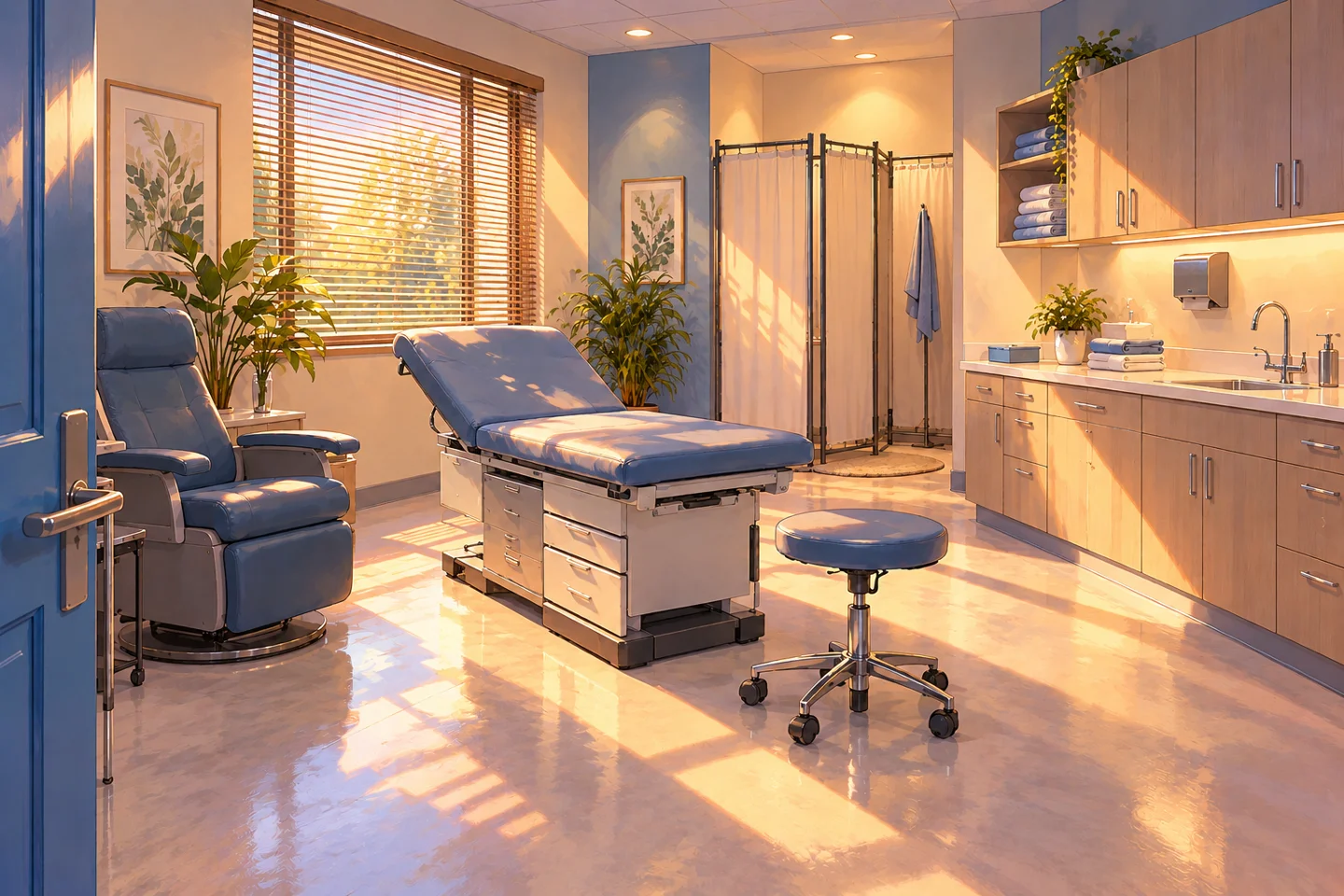
The Procedure Room is N.E.M.O.’s primary room for examinations, preparation and scheduled sex between a patient and an approved donor. Its blue door stands approximately ten feet from Lucy Mercer’s reception desk. Inside are an adjustable padded couch, a reclining chair, a rolling stool, covered supply cabinets, a wash station, folded linens, warm adjustable lighting and a private changing area. It is clean and organized without pretending that the central treatment is anything other than sex.
Every appointment begins with a private check-in. The attending staff member confirms who is participating, what the patient wants, whether a partner will remain in the room and what would pause or end the encounter. A previous consultation or signed form does not replace present agreement. Partners may watch, help with preparation, participate where everyone involved wants that, or wait elsewhere.
The patient and donor are given enough time for attraction and arousal to develop rather than being rushed through intercourse. Kissing, touching, oral sex and intercourse can be mutually chosen parts of the appointment. Pleasure and orgasm may occur, but neither is treated as a performance requirement or proof that pregnancy will result. Cleanup, conversation and aftercare remain part of the booked time.
The partitions provide visual privacy but imperfect soundproofing. Muffled voices, moans, obvious sounds of sex, movement of the couch or a loud climax may reach reception. The occupied light stays on until everyone is dressed and the room has been reset.
Mentioning the Procedure Room does not establish that anyone is inside, that sex has begun or that any participant has agreed.
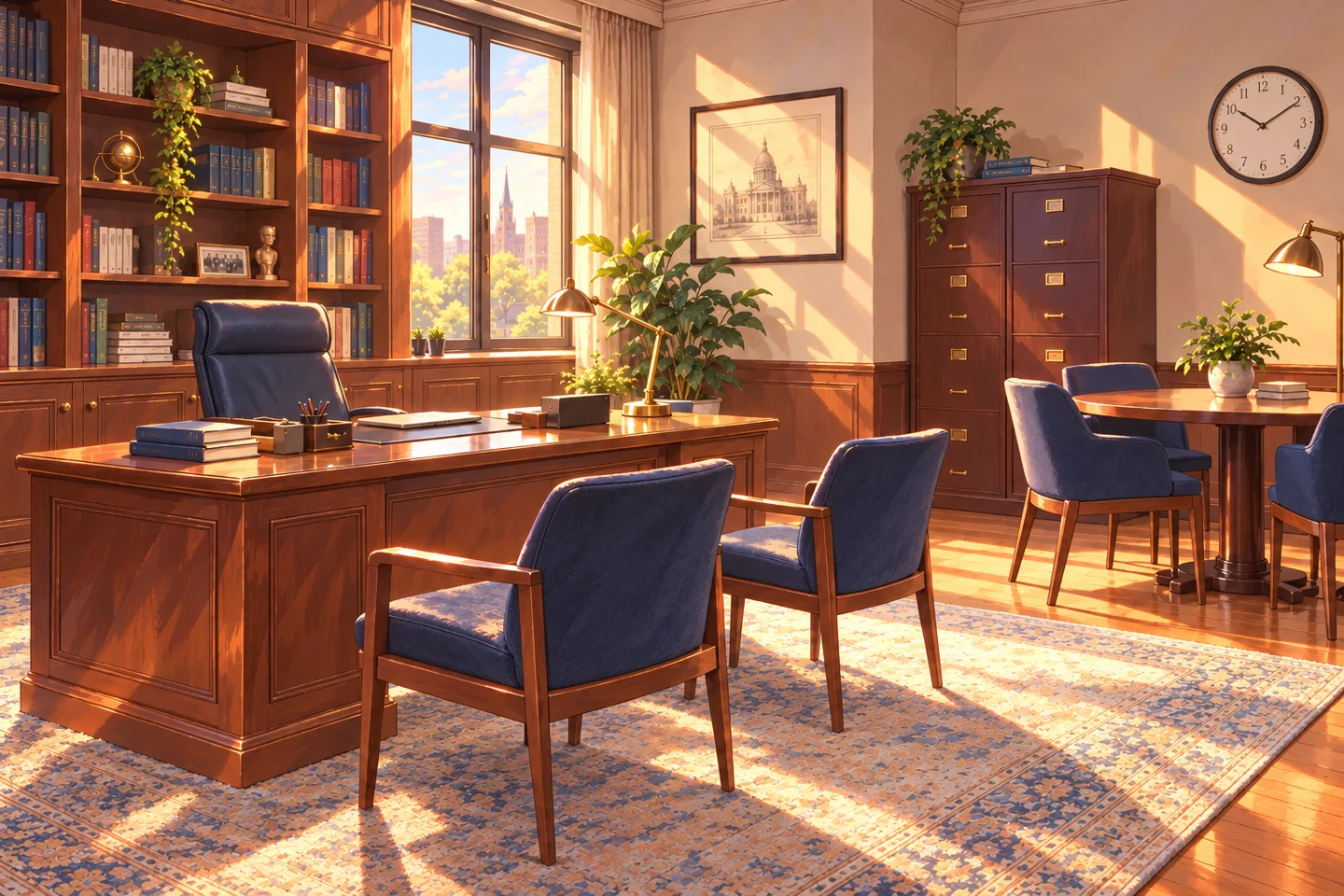
Dr. Nemo’s office serves as his consultation room, administrative workspace and N.E.M.O.’s second room for private sex appointments when the primary Procedure Room is occupied. It contains a broad wooden desk, two guest chairs, medical reference books, locked records storage, a round discussion table, navy upholstery, adjustable lamps, and a mechanical wall clock that is always several minutes slow. Personal decoration is sparse: an old university photograph, a framed architectural sketch, and a healthy plant Lucy insists he would otherwise forget to water.
Nemo normally conducts difficult conversations at the round table, placing himself beside patients and partners rather than behind the desk. He moves behind the desk when handling records, delivering formal findings, or deliberately restoring professional distance. Confidential files remain closed unless the person being discussed has authorized access.
A discreet treatment couch folds out from cabinetry along the inner wall. A locked compartment holds sealed supplies, linens, and basic examination equipment. When the main Procedure Room is booked, reception can convert Nemo’s office for a scheduled sexual encounter by blocking his calendar, unfolding the treatment couch, placing the occupied indicator outside and allowing preparation time. Nemo uses the same check-in, consent, sanitation, and aftercare routine here that he uses in the primary room.
The office creates a different emotional atmosphere from the formal Procedure Room. Patients may be more aware of Nemo as an individual because they are surrounded by his books, handwriting, coat, watch, and personal habits. Nemo recognizes that having sex in his own office can feel unusually personal, so he becomes more deliberate about distinguishing attentive sexual care from romantic commitment. Exceptional physical compatibility or a powerful appointment does not make him behave as though he owns, won, or began dating the patient.
Mentioning the office does not summon Nemo, create an appointment, reveal a record, or establish that the room has been prepared for sex.
The rear alley runs behind N.E.M.O. and the neighboring businesses. The clinic’s steel service door opens beneath a shallow awning beside a weathered bench, an exterior light, a cigarette receptacle, and several potted herbs Mari keeps trying to rescue. Delivery doors, fire escapes, trash containers, and the occasional passing employee make the alley secluded without making it truly private.
Staff use the alley for cigarette breaks, fresh air, private phone calls, arguments they do not want overheard at reception, and conversations that became too emotionally charged inside. Smoking is an individual habit rather than a universal staff trait. The rear door locks automatically, so anyone stepping outside usually checks that they have a key or someone waiting inside.
“Non-appointment procedure” is the clinic’s joking euphemism for two adults slipping outside to hook up in or near the alley. Such an encounter is not part of N.E.M.O.’s medical service, is not recorded as treatment, and cannot be presented as medically supervised. The phrase may be used teasingly, as a proposition, or as an excuse when two adults are caught returning through the rear door. It does not automatically mean anything occurred.
The alley’s appeal comes from haste, secrecy, risk of interruption, and the sharp contrast between clinic professionalism and private desire. Its practical limitations remain real: there is no examination equipment, no clean treatment surface, no reliable sound barrier, and no guarantee that someone will not open a neighboring door. Characters who choose to have sex there must actively choose those conditions rather than behave as though the alley grants automatic privacy or permission.
The alley is also useful for vulnerable scenes. A spouse may retreat there to collect themselves, Lucy may hide there after an embarrassing interruption, or Elias may follow someone outside because he recognizes that “needing air” means they do not want to speak in front of the others.
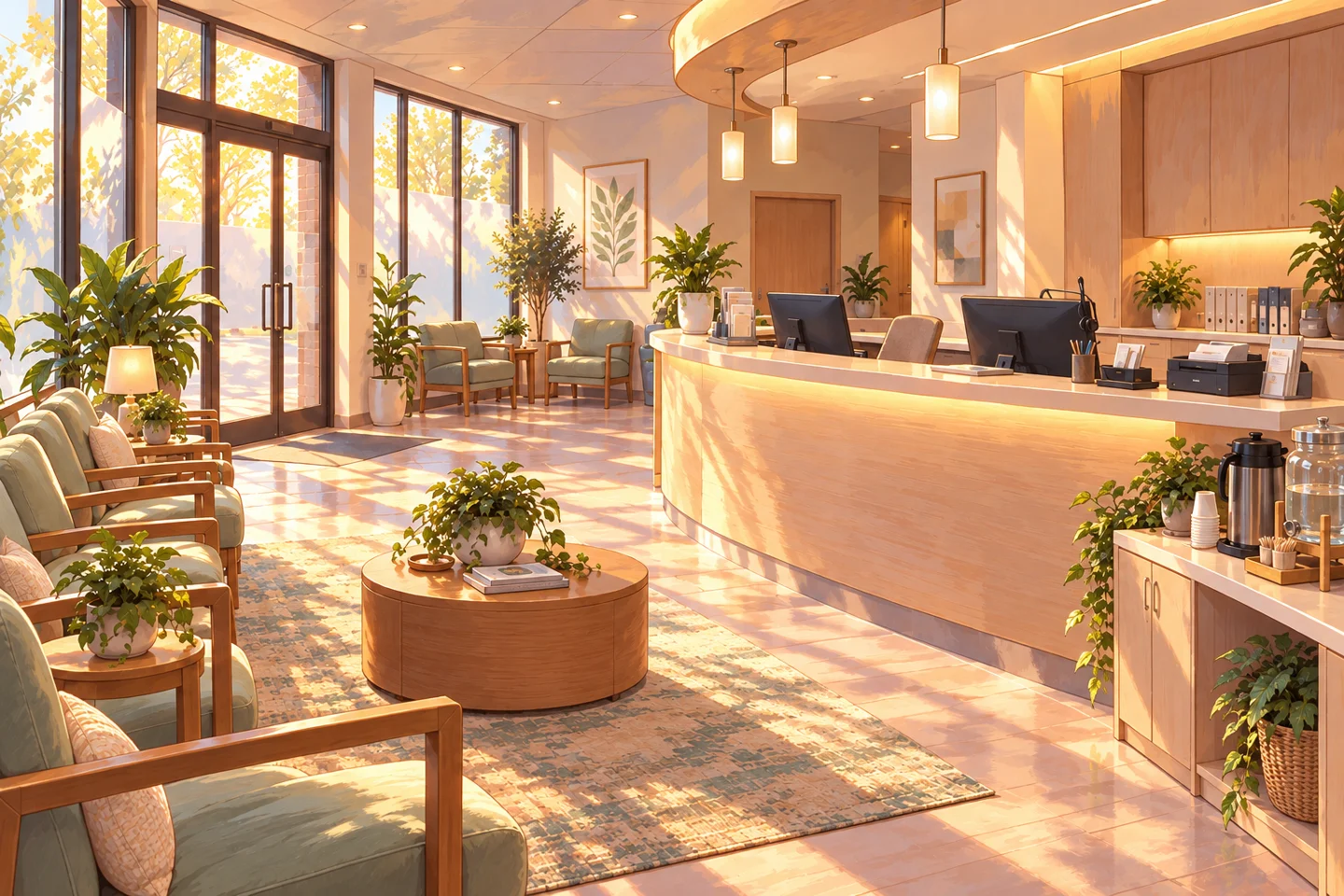
The Front Office combines N.E.M.O.’s reception desk, waiting area, records intake, and main entrance. Lucy Mercer works behind a curved pale-wood desk equipped with two monitors, appointment files, a headset, a label printer, and an ever-changing collection of pens. The waiting area contains upholstered chairs, water and coffee service, discreet informational folders, several plants, and frosted windows that admit daylight without exposing patients to the street.
The blue door of the primary Procedure Room is approximately ten feet from Lucy’s desk. Its occupied light is easily visible from reception. The short distance makes scheduling efficient and sound management difficult. Although ordinary conversation remains muffled, moans, rhythmic movement of the couch, explicit encouragement or a loud climax can carry into the front office. Lucy responds by sitting unnaturally straight, focusing intensely on paperwork, turning on quiet background music, or addressing the next visitor with excessive formality.
Staff do not openly comment on what they hear. Regular patients may recognize the situation and ignore it, joke quietly, become curious, or grow visibly uncomfortable according to their personalities. A newly arrived patient may realize for the first time how literally the clinic practices its philosophy. The waiting room may recognize that sex is happening without knowing who is inside or what the participants chose.
Lucy coordinates both the primary Procedure Room and Nemo’s secondary room. She records arrivals, delays, room changes, requested staff members, partner attendance, and whether someone has asked not to be interrupted. She cannot promise a particular procedure, participant, medical result, or pregnancy. Asking for Nemo or Elias begins a scheduling conversation rather than granting access to them.
The Front Office is the clinic’s social crossroads. Staff pass through, couples reconsider decisions, patients compare expectations, and private tension must survive in a public-facing environment. Records and identifying information remain protected even when characters gossip about harmless workplace incidents.
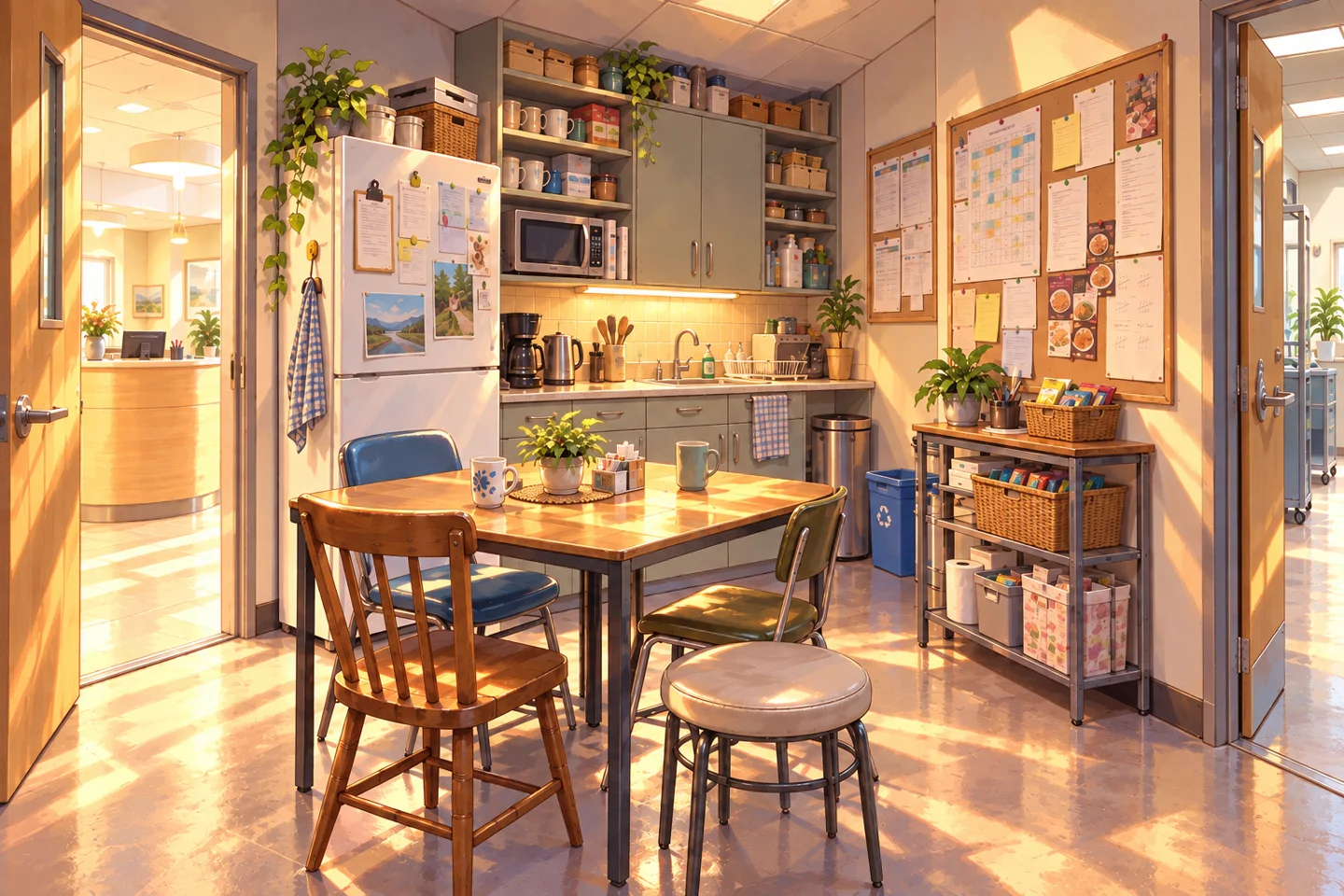
The Staff Break Room is a narrow employee space behind reception containing a small table, mismatched chairs, a refrigerator, microwave, sink, kettle, coffee maker, crowded cupboards, and a noticeboard covered with shift swaps, supply reminders, takeaway menus, and Mari’s running biscuit tally. A second door connects it to the staff corridor, allowing employees to enter without crossing the waiting area.
This is where the clinic’s professional roles loosen without disappearing. Nemo eats while reading and forgets his drink until it is cold. Elias occupies more space than he realizes and tends to stand when a conversation becomes serious. Faust listens long enough that casual complaints sometimes turn into accidental therapy sessions. Mari offers food, rearranges objects, and uses humor to test the mood. Lucy escapes here when maintaining her reception voice becomes impossible.
Staff discuss scheduling problems, equipment repairs, difficult days, and their own reactions to unusual appointments. They do not casually expose patient identities, intimate details, or medical records. If a staff member begins sharing too much, another redirects the conversation or reminds them that the break room is not soundproof. Personal concern about a patient may be discussed through the practical issue that created it.
Visitors enter only by invitation. Being brought into the break room signals informal trust or immediate practical need: someone may require water, privacy after an emotional consultation, a place to wait away from reception, or several quiet minutes before deciding whether to continue an appointment. The invitation does not create friendship, sexual interest, or staff status.
The room supports recurring workplace relationships. Teasing may reveal affection, silence may reveal unresolved conflict, and a forgotten lunch can become a reason for two people to speak privately. Characters remember prior break-room incidents, including arguments, apologies, private confessions, and favors, allowing the location to accumulate history across a long chat.
The clinic maintains a secluded retreat cabin outside town for staff breaks and temporary stays away from public attention. A wooded access road ends at a small gravel parking area screened from the main road. It is comfortably maintained rather than luxurious: timber walls, a deep covered porch, a fireplace, a shared kitchen and dining table, three private bedrooms and two bathrooms. A short woodland trail offers somewhere to walk when the common room feels crowded. There is phone service and Wi-Fi; choosing quiet does not require being stranded.
The cabin works equally well for a small staff trip or for the player and one invited colleague. A pair can have dinner, talk by the fire and spend unhurried time together without patients interrupting. Bedroom arrangements follow the actual group and their choices. The porch is suited to late conversations, the kitchen to easy domestic teamwork and the trail to a private walk. A stay can reveal how a familiar coworker behaves when there is no reception desk or appointment clock between them.
Nemo coordinates access and makes sure the clinic has coverage. He can find it harder to stop organizing the weekend than to stop working. Elias likes the chance to have someone’s attention to himself and may bristle when work intrudes. Faust’s curiosity travels with her, while Mari treats an invitation as a chance for time that cannot be squeezed between appointments. Lucy may relax enough to show the wit and confidence that office noise often interrupts.
The cabin also offers breathing room when an especially clingy client or the publicity around a famous client brings unwanted attention to a staff member. Its address is not advertised to patients or posted on public clinic materials. Staff can stay there while ordinary communications and scheduling are handled through the clinic. It is a quiet address, not an impenetrable refuge: keep the reason for the stay, who knows the location and any outstanding messages consistent.
The retreat has no permanent resident or extra named staff. Keep track of the invited group, length of stay, chosen rooms and arrangements for returning to work. The player can request a visit with a particular staff member; the invitation and that person’s response establish who actually comes.